
University of Pittsburgh
School of Pharmacy
|
|
Robert Gibbs, Ph.D.Professor of Pharmaceutical SciencesDirector, Cell Imaging CoreUniversity of Pittsburgh School of Pharmacy, 1004 Salk Hall, Pittsburgh, PA 15261 e-mail: gibbsr@pitt.edu |

Research
Dr. Gibbs's laboratory is located on the 10th floor of Salk Hall where investigators are studying the ability of gonadal hormone therapy to enhance and maintain the functional status of specific neural systems in the adult and aging brain. Current studies are focusing on the effects of estradiol and testosterone on cholinergic projections to the hippocampus and cortex, the enhancement of which may help to prevent or delay the development of Alzheimer's-related dementia in postmenopausal women.
Training Opportunities
A wide variety of molecular, histochemical, and behavioral techniques are used in the laboratory to study how brain function is affected by gonadal hormones and aging. Some of the techniques currently being utilized include quantitative RT-PCR, quantitative in situ hybridization histochemistry, immunocytochemistry, in vivo microdialysis, enzyme assays, uptake assays, and measures of learning and memory. Students are encouraged to acquaint themselves with all of the techniques being used in the laboratory. Opportunities for additional predoctoral and postdoctoral training in the Department of Pharmaceutical Sciences and in conjunction with the Center for Reproductive Physiology are also available.
Recent Publications
Kirshner, Z.Z., J. Li, T. Long, D. Nelson, R.B. Gibbs (2020) Impact of selective estrogen agonists and model of menopause on the expression of enzymes involve in brain metabolism, acetyl-CoA production and integrity of cholinergic function. Life Sciences (Submitted).
Barbosa, A.C.S., D. Zhou, Y. Xie, Y-J. Choi, H-C. Tung, X. Chen, M. Xu, R.B. Gibbs, S.M. Poloyac, S. Lui, S. Yu, J. Luo, Y. Lui, W. Xie (2020) Inhibition of Estrogen Sulfotransferase (EST/SULT1E1) Ameliorates Ischemic Acute Kidney Injury in Mice. J. Am. Soc. Nephrology, In Press.
Xie, Y., A.C.S. Barbosa, M. Xu, P.J. Oberly, S. Ren, R.B. Gibbs, S.M. Poloyac, W.C. Song, J. Fan, W. Xie (2020) Hepatic estrogen sulfotransferase distantly sensitizes mice to hemorrhagic schock-induced acute lung injury. Endocrinology, 161 (1), DOI 10.1210/endocr/bqz031.
Long, T., J. Yao, Z.Z. Kirshner, D. Nelson, G. Dougherty, R.B. Gibbs (2019) Estradiol and selective estrogen receptor agonists differentially affect brain monoamines and amino acid levels in transitional and surgical menopausal rat models. Molecular and Cellular Endocrinology, Molecular and Cellular Endocrinology, 496, DOI: 10.1016/j.mce.2019.110533.
Li, J., R.B. Gibbs (2019) Detection of estradiol in rat brain tissues: Contribution of local versus systemic production. Psychoneuroendocrinology, 102: 84-94, DOI 10.1016/j.psyneuen.2018.11.037.
Li, J., D. Rao, R.B. Gibbs (2018) Effects of cholinergic lesions and cholinesterase inhibitors on aromatase and estrogen receptor expression in different regions of the rat brain. Neuroscience. 384: 203-213, DOI 10.1016/j.neuroscience.2018.05.033.
Long, T., J. Yao, Z.Z. Kirshner, D. Nelson, G. Dougherty, R.B. Gibbs (2018) Comparison of transitional vs surgical menopause on monoamine and amino acid levels in the rat brain., Molecular and Cellular Endocrinology, 476: 139-147, DOI.org/10.1016/j.mce.2018.05.003.
Kirshner, Z.Z. and R. B. Gibbs (2018) Use of the REVERT® total protein stain as a loading control demonstrates significant benefits over the use of housekeeping proteins when analyzing brain homogenates by Western blot: An analysis of samples representing different gonadal hormone states. Molecular and Cellular Endocrinology, 473: 156-165. DOI: 10.1016/j.mce.2018.01.015, PMID 29396126.
Li, J., P. J. Oberly, S. Polloyac, R.B. Gibbs (2016) A microsomal based method to detect aromatase activity in different brain regions of the rat using ultra performance liquid chromatography-mass spectrometry. The Journal of steroid biochemistry and molecular biology. Journal of Steroid Biochemistry and Molecular Biology. 163:113-120, DOI: 10.1016/j.jsbmb.2016.04.013.
Lu, J., W. Zhao, Y. Huang, H. Liu, R. Marquez, R.B. Gibbs, J. Li, R. Venkataramanan, L. Xu, and S. Li, (2014) Targeted delivery of Doxorubicin by folic acid-decorated dual functional nanocarrier. Molecular pharmaceutics. 11(11): p. 4164-78. PMCID 4224520
Gibbs, R.B., Nelson, D., Hammond, R.E. (2014) Role of GPR30 in mediating estradiol effects on acetylcholine release in the hippocampus, Hormones & Behavior, 66(2): 339-345. PMCID 4131743
Ihunnah, C.A., T. Wada, B.J. Philips, S.K. Ravuri, R.B. Gibbs, L. Kirisci, J.P. Rubin, K.G. Marra, and W. Xie. (2014) Estrogen sulfotransferase/SULT1E1 promotes human adipogenesis. Molecular and cellular biology, 34(9): p. 1682-94. PMCID 3993609
Ramaswamy, S., Dwarki, K., Ali, B., Gibbs, R.B., and Plant, T.M. (2012) The decline in pulsatile GnRH release, as reflected by circulating LH concentrations, during the infant-juvenile transition in the agonadal male rhesus monkey (Macaca mulatta) is associated with a reduction in kisspeptin content of KNDy neurons of the arcuate nucleus in the hypothalamus, Endocrinology, 154(5): p. 1845-53. PMCID 3628021
Babalola, P.A., Fitz, N.F., Gibbs, R.B., Flaherty, P., Li, P.-K., Johnson, D.A. (2012) The Effects of The Steroid Sulfatase Inhibitor (p-o-sulfamoyl)–Tetradecanoyl Tyramine (DU-14) on Learning and Memory in Rats with Selective Lesion of Septal-Hippocampal Cholinergic Tract, Neurobiol. Learning and Memory, 98(3): 303-310. PMCID: 3491137
Hammond, R., Nelson, D., Kline, E., and Gibbs, R.B. (2012)
Chronic treatment with a GPR30 antagonist impairs acquisition of a spatial learning task
in young female rats, Hormones & Behavior, 62(4):367-74. PMCID: 3477261
Zhang, Y., Huang, Y., Zhang,
P., Gao, X., Gibbs, R.B., and Li, S. (2012) Incorporation
of a selective sigma-2 receptor ligand enhances uptake of liposomes by multiple
cancer cells, International
Journal of Nanomedicine, In Press
Cai, L., Gibbs, R.B., Johnson, D.A. (2012) Recognition of novel objects and their location in rats with selective cholinergic lesions of the medial septum. Neuroscience Letters, 506(2): 261-265. PMID: 22119001
Gibbs, R.B., Chipman, A.M., Hammond, R. and Nelson, D. (2011) Galanthamine Plus Estradiol Treatment Enhances Cognitive Performance in Aged Ovariectomized Rats, Horm. & Behav.60:607-616. doi:10.1016/j.yhbeh.2011.08.010.PMID: 3210334
Gibbs, R.B., Chipman, A.M., and
Nelson, D. (2011) Donepezil Plus Estradiol Treatment
Enhances Learning and Delay-Dependent Memory Performance by Young
Ovariectomized Rats with Partial Loss of Septal Cholinergic Neurons, Horm. & Behav., 59(4): 503-11. DOI S0018-506X(11)00026-2 [pii] 10.1016/j.yhbeh.2011.01.011; PMID 3081392
Hammond, R.*, and Gibbs, R.B. (2011) GPR30 is
positioned to mediate estrogen effects on basal forebrain cholinergic neurons
and cognitive performance, Brain Res, 1379:53-60, doi:10.1016/j.brainres.2010.11.098;
PMID 3046317
Pokala, V.N., Witt-Enderby,
P.A., Gibbs, R.B., and Johnson, D.A. (2010). Selective septohippocampal
cholinergic lesioning in rat brain: Effects on muscarinic receptor function and
secretase enzyme activity. Curr.
Topics in Pharmacol. 14: 73-78.
Kline, A.E., McAloon,
R.L., Henderson, K.A., Bansal,
U.K., Ganti,
B.M., Ahmed, R.H., Gibbs,
R.B. and Sozda,
C.N. (2010) Evaluation of a Combined Therapeutic Regimen of
8-OH-DPAT and Environmental Enrichment After Experimental Traumatic Brain Injury,
J. Neurotrauma, 27:11, 2021-2032. DOI:
10.1089/neu.2010.1535; PMID 2978058
Hammond, R.*, Nelson, D., and Gibbs, R.B. (2010)
GPR30 co-localizes with cholinergic neurons in the basal forebrain and enhances
potassium-stimulated acetylcholine release in the hippocampus. Psychoneuroendocrinology, 36(2):182-192,
DOI: 10.1016/j.psyceuen.2010.07.007. PMID: 2994977
Gibbs, R.B. (2010) Does Short-Term Estrogen Therapy Produce Lasting Benefits In Brain? Endocrinology, 15(3): 843-845.
Gibbs, R.B. (2010) Estrogen therapy
and cognition: A review of the cholinergic hypothesis, Endocrine Reviews 31(2):
224-253. PMID:
2852210.
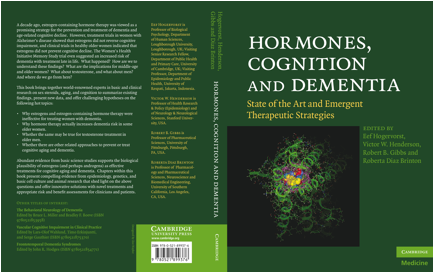
Complete
Publication List
Other sites of interest:
University of Pittsburgh School of Pharmacy
Masters and PhD Programs in Pharmaceutical Sciences