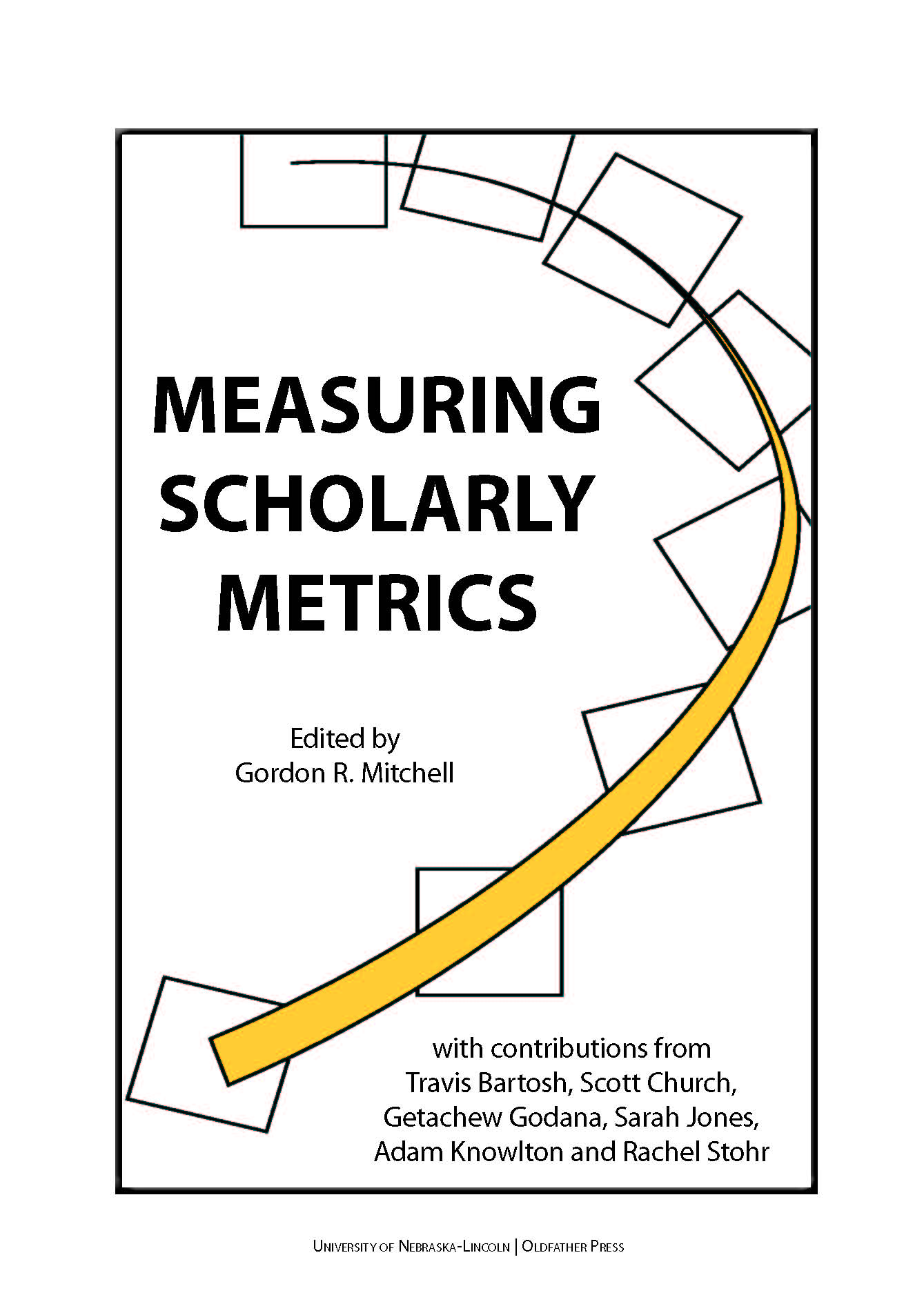


- "Promoting Patient Phronesis: Communication Patterns in an Online Lifestyle Program Coordinated with Primary Care" (co-authored with John R. Rief, Susan L. Zickmund, Tina D. Bhargava, Cindy L. Bryce, Gary S. Fischer, Rachel Hess, N. Randall Kolb, Laurey R. Simkin-Silverman & Kathleen M.). Health Education & Behavior (2012), in press, published online before print September 14, 2012, DOI: 10.1177/1090198112452863.
- "Emerging Communication Technologies and the Practices of Enhanced Deliberation: The Experience of the Benjamin Franklin Transatlantic Fellows Summer Institute." (co-authored with Allesandra Beasley Von Burg, Ron Von Burg, and Allan D. Louden). Journal of Public Deliberation, 8 (2012), No. 1.
- "Translation Through Argumentation in Medical Research and Physician Citizenship" (co-authored with Kathleen M. McTigue). Journal of Medical Humanities 33 (2012): 83-107. DOI: 10.1007/s10912-012-9171-y.
- "iSocrates: Student-led Public Debate as Cultural Technology". Controversia 7 (2011): 54-75.
- "The Debate Authors Working Group Model for Collaborative Knowledge Production in Forensics Scholarship" (co-authored with Carly S. Woods, Matthew Brigham, Eric English, Catherine E. Morrison and John Rief). Argumentation & Advocacy 47 (2010): 1-24 (lead essay).
- "Higher-Order Strategic Maneuvering in Argumentation." Argumentation 24 (2010): 319-335.
- "Switch-Side Debating Meets Demand-Driven Rhetoric of Science." Rhetoric & Public Affairs 13 (2010): 95-120.
- "Forensics as Scholarship: Testing Zarefsky's Bold Hypothesis in a Digital Age" (co-authored with G. Thomas Goodnight). Argumentation & Advocacy 45 (2008): 80-97.
- "Between Education and Propaganda: Public Controversy Over Presidential Library Design" (co-authored with Jennifer Kirk). Argumentation & Advocacy 44 (2008): 213-230.
- "The US Obesity 'Epidemic': Metaphor, Method, or Madness?" (co-authored with Kathleen M. McTigue). Social Epistemology 21 (2007): 391-423.
- "Debate as a Weapon of Mass Destruction" (co-authored with Eric English, Stephen Llano, Catherine E. Morrison, John Rief, and Carly Woods). Communication & Critical/Cultural Studies
4 (2007): 222-226. - "Deliberating Debate's Digital Futures" (co-authored with Carly Woods, Matthew Brigham, Brent Heavner, Takuzo Konishi, John Rief, and Brent Saindon). Contemporary Argumentation and Debate 27 (2006): 81-205.
- "Navigating Dangerous Deliberative Waters: Shallow Argument Pools, Group Polarization and Public Debate Pedagogy in Southeast Europe" (co-authored with Damien Pfister, Georgeta Bradatan, Dejan Colev, Tsvetelina Manolova, Gligor Mitkovski, Ivanichka Nestorova, Milena Ristic and Gentiana Sheshi). Controversia 4 (2006): 69-84.
- "Team B Intelligence Coups." Quarterly Journal of Speech 92 (May 2006): 144-73.
- "Public Argument Action Research and the Learning Curve of New Social Movements." Argumentation and Advocacy 30 (Spring 2004): 209-225 (lead essay).
- "Did Habermas Cede Nature to the Positivists?" Philosophy and Rhetoric 36 (Fall 2003): 1-21 (lead essay).
- "The Blooming of Balkan Public Debate." Controversia 1 (Fall 2002): 86-89; Russian translation: 105-109.
- "Public Argument-Driven Security Studies." Argumentation and Advocacy 39 (Summer 2002): 57-72 (lead review essay).
- "Informed Consent After the Human Genome Project" (co-authored with Kelly Happe). Rhetoric and Public Affairs 4 (Fall 2001): 375-406.
- "Defining the Subject of Consent in DNA Research" (co-authored with Kelly Happe). Journal of Medical Humanities 22 (Spring 2001): 41-54.
- "Japan-U.S. Missile Defense Collaboration: Rhetorically Delicious, Deceptively Dangerous." Fletcher Forum of World Affairs 25 (Winter 2001): 85-108.
- Editors' introduction to special double issue on the inaugural AARST Science Policy Forum (co-authored with Timothy M. O'Donnell). Social Epistemology 14 (April-September 2000): 79-88.
- "Fact, Friction, and Political Conviction in Science Policy Controversies" (co-authored with Marcus Paroske). Social Epistemology 14 (April-September 2000): 89-108 (lead essay).
- "Placebo Defense: The Rhetoric of Patriot Missile Accuracy in the 1991 Persian Gulf War." Quarterly Journal of Speech 86 (May 2000): 121-45 (lead essay).
- "Whose Shoe Fits Best? Dubious Physics and Power Politics in the TMD Footprint Controversy." Science, Technology and Human Values 25 (Winter 2000): 53-87.
- "Simulated Public Argument as a Pedagogical Play on Worlds." Argumentation and Advocacy 36 (Winter 2000): 134-50.
- "Pedagogical Possibilities for Argumentative Agency in Academic Debate." Argumentation and Advocacy 35 (Fall 1998): 41-60 (lead essay).
- "Another Strategic Deception Initiative." Bulletin of the Atomic Scientists 53 (March/April 1997): 22-23.
- Interview with P.J. Maloney on KQV Radio (Pittsburgh AM 1410) regarding Karl Rove visit to Cold War rhetoric class, March 3, 2008.
- Summary of Education and Advocacy on Preventing Nuclear Terrorism, Ridgway Center briefing for Physicians for Social Responsibility and Faithful Security. University of Pittsburgh. Babcock Room, Cathedral of Learning. May 16, 2006.
- Summary of meeting with former Treasury Secretary Paul O'Neill to discuss research findings of the Ridgway Center Working Group on Preemptive and Preventive Military Intervention. University of Pittsburgh. Posvar Hall. January 25, 2006.
- Rodger A. Payne, "Deliberating Preventive War: The Strange Case of Iraq's Disappearing Nuclear Threat," Ridgway Center Working Paper 2005-6 (August 2005).
- Greg Thielmann, "Intelligence in Preventive Military Strategy," Ridgway Center Working Paper 2005-10 (August 2005).
- Dan Reiter, "The Osiraq Myth and the Track Record of Preventive Military Attacks," Ridgway Center Policy Brief 04-2 (October 2004).
- Greg Thielmann, "Preventive Military Intervention: The Role of Intelligence," Ridgway Center Policy Brief 04-1 (October 2004).
- Transcript of October 27, 2004 live appearance by Gordon Mitchell on Night Talk (PCNC/WPXI-TV-TV). Topic: Preventive warfare and missing weapons in Iraq.
- Transcript of October 22, 2004 taped interview of Gordon Mitchell by Hank Baughman on Pittsburgh Focus, simultaneously broadcast October 24, 2004 on WISH Radio (99.7 FM); WJAS Radio (1320 AM); WPTT Radio (1360 AM) with selected portions to air subsequently in news segments on each station. Topic: Nuclear proliferation and preventive warfare.
- Transcript of October 11, 2004 live interview of Gordon Mitchell by Ann Devlin on Night Talk (PCNC/WPXI-TV). Topic: Preventive warfare and 2004 presidential campaign debates.
- Transcript of October 9, 2004 live interview of Gordon Mitchell by Colleen Rowley on KQV Radio (AM 1410). Topic: Preventive warfare and 2004 presidential campaign debates.
- "On the Difference between Pre-emptive and Preventive War," interview of Gordon Mitchell by Bruce Steele in University Times (University of Pittsburgh faculty and staff newspaper), February 19, 2004.
- "By 'Any Measures' Necessary: NSC-68 and Cold War Roots of the 2002 National Security Strategy" (co-authored with Robert P. Newman). Ridgway Center for International Security Studies Working Paper WP2006-3 (February 2006)
- "Preventive Force: Untangling the Discourse" (co-authored with William W. Keller). Ridgway Center for International Security Studies Working Paper WP2006-11 (February 2006)
- "Missile Defence: Trans-Atlantic Diplomacy at a Crossroads." (co-authored with Kevin J. Ayotte and David Cram Helwich). International Security Information Service (UK) Briefing Series on Ballistic Missile Defence No. 6 (July 2001). See Richard Norton-Taylor's article in The Guardian (London) discussing release of briefing.
- "National Missile Defense: An Overview." Raketenabwehrforschung International Briefing (April 2001).
- "US National Missile Defence: Technological Challenges, Political Pitfalls, and Disarmament Opportunities." International Security Information Service (Europe) Briefing No. 23 (May 2000).
- "Missile Defence Policy: Strident Voices and Perilous Choices." International Security Information Service (UK) Briefing Series on Ballistic Missile Defence No. 1 (April 2000).
- "Return of the Death Star?" (co-authored with members of the Cherub Study Group). Federation of American Scientists E-Print (1998).
- "Two-Way Deception Traffic on the Road to Theater High Altitude Air Defense." Federation of American Scientists E-Print (1997).
- "The TMD Footprint Controversy." Federation of American Scientists E-Print (1996).
- "Sparta's Advice to BMDO: Overstepping the Boundaries of FACA?" Federation of American Scientists E-Print (1996).
- "The Osiraq Illusion." (coauthored with William W. Keller). Pittsburgh Post-Gazette, June 7, 2006, B7; Syndicated by Scripps Howard News Service and republished in The Providence Journal, June 28, 2006; Rocklin & Roseville Today, June 24, 2006; The Daily Camera (Boulder, CO), July 2, 2006; and The Windsor Star (Ontario, Canada), July 7, 2006.
- "Considering the Death Penalty" (Interview with William Schabas). GlobalBeat (an independent news syndicate affiliated with New York University). April 2003.
- "Considering the Comprehensive Nuclear Test Ban Treaty" (Interview with Brahma Chellaney). GlobalBeat (an independent news syndicate affiliated with New York University). April 2003.
- "Sisters are Right on Space Weaponization." Hartford Courant, March 29, 2002.
- "Scarecrow Missile Defense." Pittsburgh Post-Gazette, July 8, 2001, E-1; Editorial responses.
- "Consider the Cycle of Violence if Retaliation Kills Civilians Abroad." Pittsburgh Post-Gazette, September 16, 2001, A-17.
- "Reagan's Forgotten Vision: Supporters of Missile Defense Ignore Priority of Disarmament." Pittsburgh Federalist (Fall 2000): 10-11.
- "About those Normal Accidents." Pittsburgh Post-Gazette, July 16, 2000, E-4.
- "The National Missile Defense Fallacy." Pittsburgh Post-Gazette, April 29, 2000, A-17.
- "Civilian Police Review Board: Yes or No?" (co-authored with Kelly Happe). Pittsburgh Post-Gazette, March 9, 1997, E-1.
- "Debate-friendly Convention Panel Format" (created by Gordon Mitchell and Jason Regnier, debuted at 2007 National Communication Association convention in Chicago).
- "DAWG Power: The Synergy of Writing in Packs" (co-authored by Gordon R. Mitchell, Carly Woods, Matthew Brigham, Eric English and John Rief). Paper presented at the 15th NCA/AFA Alta Argumentation Conference, Alta, UT, August 2-5, 2007.
- Guidelines for Co-authorship of Work Products (version 2.0)
- DAWG Co-authorship Worksheet
- Sample of completed DAWG Co-authorship Worksheet
- "Should Congress guarantee net neutrality?" Art Brodsky and Michael Mangus vs. Hal Singer and Guy Risko. Sennott Hall, University of Pittsburgh. February 23, 2007.
Flier PDF [596K]
Media advisory
Program Word doc [288K] - "Should abstinence-only sex education be taught in primary and secondary school health curricula?" Dr. Margaret Meeker and Darinka Maldonado vs. Brenda Green and Allison Hahn. Parran Auditorium. Graduate School of Public Health, University of Pittsburgh. November 20, 2003.
Flier Word doc [664K]
Media advisory Word doc [288K] - "Should the United States Sell Arms to Taiwan?" Cynthia Kinnan vs. Andrew Stangl, with expert commentary from Professor Davis Bobrow. University of Pittsburgh. William Pitt Union Ballroom. Pittsburgh, PA. April 12, 2001.
Program PDF file [15K]
Transcript html [79K] / Word doc [81K] - "Could School Vouchers Improve the Quality of Education in Our State?" Eugene Hickok, David Kirkpatrick and Denise Olczak vs. Rev. Thomas E. Smith, Melissa Butler, and Bianca Huff. University of Pittsburgh. William Pitt Union Assembly Room. Pittsburgh, PA. March 23, 1999.
Sample invite letters PDF file [15K] / Word doc [6K]
Flier PDF file [4K] / Word doc [6K]
Program PDF file [19K] / Word doc [20K]
Transcript PDF file [184K] / Word doc [130K]
Selected news coverage PCN-TV [PDF 4K] / Pittsburgh Tribune-Review[html 4K] Pittsburgh Courier[PDF 1.2MB] - "Is there Sufficient Scientific Evidence which Proves We Should Limit Greenhouse Gas Emissions Because of Climate Change?" Dr. James E. Hansen vs. Dr. Patrick J. Michaels. National Communication Association Convention. Hilton Hotel Green Room. New York, NY. November 20, 1998.
Program PDF file [19K]
Transcript PDF file [3.2MB]
O'Donnell introduction PDF file [192K]
Hansen commentary NASA website
Shackley commentary PDF file [97K]
Ziman commentary PDF file [138K]
Wander and Jaehne commentary PDF file [213K] - "Should Pittsburgh Adopt a Citizen Police Review Board?" Billy Hileman, Joe Panzino and Hon. Sala Udin vs. Bianca Huff, Marshall Hynes and Hon. Dan Onorato. University of Pittsburgh. Forbes Quadrangle Lecture Hall. Pittsburgh, PA. March 23, 1997.
Transcript of student warm-up debate PDF file [65K]
CRB timeline PDF file [8K]
Transcript of final debate html [140K]
Citizen participation PDF file [1.8MB]
Selected news coverage Pittsburgh Tribune-Review [PDF 1.1MB] Pittsburgh Post-Gazette [PDF 3.3MB] - Transcript of October 6, 2004 live interview by Walt Golden on KQV Radio (AM 1410) Topic: Vice presidential debate [12K].
- Transcript of October 5, 2004 live interview by Walt Golden on KQV Radio (AM 1410) Topic: Vice presidential debate [12K].
- Transcript of October 1, 2004 live interview by Joe Finn on KQV Radio (AM 1410) Topic: First presidential debate [12K].
- Transcript of September 30, 2004 live interview by P.J. Maloney on KQV Radio (Am 1410) Topic: Presidential debates [16K].
- Transcript of June 30, 2005 live interview by Ann Devlin, television host of Night Talk on the Pittsburgh Cable News Channel (Pittsburgh). Topic: Mahmood Ahmadinejad [16K].
- Transcript of October 1, 2003 live interview by John McIntire, television host of Night Talk on the Pittsburgh Cable News Channel (Pittsburgh). Topic: Valerie Plame leak scandal [12K].
- "Team B Wins Again: Competitive Intelligence Assessment in the Bush National Security Strategy." Paper presented at the 12th NCA/AFA Conference on Argumentation, Alta UT, August 1, 2003. html [40K]
- Transcript of April 10, 2003 live interview by John McIntire, television host of Night Talk on the Pittsburgh Cable News Channel (Pittsburgh). Topic: War in iraq [12K].
- "American Itsesensuuri: A Typology of Self-Censorship in the 'War on Terror.'" In Frans van Eemeren, et al., ed., Proceedings of the Fifth ISSA Conference on Argumentation (Amsterdam: SicSat, 2003): 767-72. PDF file [181K]
- "Beyond 'With Us or With the Terrorists,'" 2002 Orville Hitchcock Lecture, University of Iowa, January 29, 2002 PDF file [384K].
- Transcript of December 13, 2001 interview by Tom Sussi, television reporter for Fox 53 News (Pittsburgh). Selected portions aired December 13, 2001 on Fox 53 News html [4K].
- "Summation speech." Public address at the Stand For Justice Rally, sponsored by the Western Pennsylvania Campaign to Abolish Nuclear Weapons Coalition. Market Square, Pittsburgh, PA, October 11, 2001 html [6K].
- Transcript of October 11, 2001 interview by Kirsi Jansa, freelance reporter for the Finland Broadcasting Company. Aired October 16, 2001 on Finland TV Channel 2 Ajankohtainen Kakkonen program html [18K].
- "Spectactular Warfare." In G. Thomas Goodnight, ed., Arguing Communication and Culture: Selected Papers from the Twelfth AFA/NCA Conference on Argumentation (Annandale, VA: National Communication Association, 2002): 137-44. PDF file [163K]
- "Reflexive Fiat." The Rostrum 72 (January 1998): 11-20. html [21K] Word doc [23K] PDF file [72K]
- "Time for an Activist Outward Turn in Academic Debate." In Roger Solt, ed., United States Foreign Policy: China Cards (Winston-Salem: DRG, 1995): 4-7. html [33K]
- "International Fiat and Plan-Inclusive Counterplans: New Tools for the Negative." In Roger Solt, ed., Effluents and Affluence: Global Pollution (Winston-Salem: DRG, 1992): 4-7. html [33K]
- "The Orality Masquerade." In Roger Solt, ed., Space Exploration: The Policy Frontier (Winston-Salem: DRG, 1990): 3-6. html [26K]
- "Rebounding From Hard Acts to Follow." In Roger Solt, ed., Retirement Security: Shuffleboard on the Titanic (Winston-Salem: DRG, 1989): 7-10. html [29K]
-
The Ben Franklin Transatlantic Fellows (BFTF) Initiative is a civic exchange program sponsored by the U.S. Department of State and Wake Forest University. In July 2006, the program brought 45 high school students from 32 countries (such as Malta, Turkmenistan, Azerbaijan, Sweden, Greece, Albania and the United States) to Winston-Salem, North Carolina for a month of study focusing on civil society, constitutionalism, and online civic engagement. For the final week of the workshop, students broke into seven groups to research some of the world's pressing issues, following a curriculum developed by Gordon Mitchell and Damien Pfister. On July 21, students presented their research (view event program) in the form of taped podcast performances, which are archived online:
The conversations spurred by the student podcasts continued on their Weblogs, with some of the world's top experts in the topic areas offering feedback and contributing their own thoughts. For example, after listening to the Iran group's podcast, Dr. William B. Quandt, the Edward R. Stettinius, Jr., Professor of Politics at the University of Virginia, congratulated the Ben Franklin fellows for "expressing their views so well." This is heady praise coming from a senior foreign policy expert who has served in the White House as a National Security Council Staff member for the Middle East (1972-74, 1977-79) and was involved in the negotiations that led to the Camp David Accords and the Egyptian-Israeli Peace Treaty. But Professor Quandt also used the opportunity to comment on the format of the Iran group's podcast performance to make a larger point about public discourse surrounding the policy issues posed by Iran's nuclear program. Other student Weblogs simmered with provocative and informed banter on timely topics. Over at the Russia group's Weblog, noted terrorism expert Daveed Gartenstein-Ross, senior consultant with The Gerard Group International and columnist for Front Page Magazine; and Will Schirano, foreign policy research associate with The Heritage Foundation responded to a student podcast exploring the significance of the death of Chechen militant Shamil Basayev. At the students' immigration Weblog, Dr. Nathaniel Cordova, assistant professor of rhetoric and media studies at Willamette University and Lesley Wexler, J.D., assistant professor of law at Florida State University engaged the students in a dialogue about the terminology used in public discourse on the immigration issue.- Immigration Weblog
(hosting audio podcast featuring simulated radio talk show on immigration discourse)- Climate Weblog (hosting audio podcast of roundtable discussion on 'new' versus 'old' media in climate debate)
- Energy Weblog (hosting audio podcast of simulated dating game for cars run on alternative fuels)
- Iran Weblog (hosting audio podcasts of three mini-debates on diplomacy and Iran: part one / part two / part three)
- Turkey Weblog (hosting audio podcast of fictional college admissions role-play performance and student roundtable on Turkey's application for EU membership: part one / part two)
- Russia Weblog (hosting audio podcast of roudtable discussion regarding death of Shamil Basayev)
- Development Weblog (Audio podcast under construction)
- The Southeast European Youth Leadership Institute (SEEYLI) is a month-long summer camp that brings scores of high school students and community leaders from Albania, Bulgaria, Kosovo, Macedonia, Montenegro, Romania, and Serbia to the United States for an intensive four-week program of studies in civic culture. The third phase of the program, sponsored by the U.S. Department of State and the Open Society Institute, focuses on cooperative public debate activities designed to reach general audiences. Students learn many of the basic elements of argumentation practice taught in standard debate institutes, but then supplement that knowledge with study of the public debate method as a political strategy for enlivening civil society. The concept and curriculum for this public debate program was developed in 2002 by Ken Broda-Bahm, Daniela Kempf and Gordon Mitchell, and implemented first in the Towson University SEEYLI. More background on the origins and concept can be found in "The Blooming of Balkan Public Debate," a 2002 article on SEEYLI published in Controversia (the Open Society Institute's scholarly journal). In 2004, Allan Louden and Gordon Mitchell added a branch of the program at Wake Forest University, where several innovations were introduced. See the 2004 curriculum for a general overview, and download a draft of "Navigating Dangerous Deliberative Waters: Shallow Argument Pools, Group Polarization and Public Debate Pedagogy in Southeast Europe," a scholarly paper co-authored by Gordon Mitchell and seven adult community leaders attending the 2005 Wake Forest SEEYLI. The slate of 2004 SEEYLI Wake Forest public debates featured invited guest speakers and an off-site public debate venue. The 2005 institute built on these innovations, featuring even more invited guest speakers, three off-site public debate venues, and a collective follow-on amplification project designed to bridge the students' arguments to wider spheres of public deliberation (See the official 2005 Wake Forest SEEYLI website for more information on each). One of the 2005 off-site debates was held at the Winston-Lake YMCA on July 29, 2005, where students debated the question, "Should Voting Be Mandatory for all Eligible Citizens in the US?" The speeches from this debate have been archived below for podcast listening:
- Moderator's Introduction (Iva Nestorova, Bulgaria) - 12:44 mp3 [11.6MB]
- First affirmative speech (Jetmira Jenjelaj, Albania) - 5:15 mp3 [4.8MB]
- First negative speech (Grigore Pop, Romania) - 6:47 mp3 [6.2MB]
- Second affirmative speech (Mite Tashev, Macedonia) - 5:37 mp3 [5.1MB]
- Second negative speech (Stanimir Ivanchev, Bulgaria) - 4:31 mp3 [4.1MB]
- Audience Q and A (All speakers) - 11:51 mp3 [10.8MB]
- Affirmative rebuttal (Jetmira Jenjelaj, Albania) - 3:13 mp3 [2.9MB]
- Negative rebuttal (Grigore Pop, Romania) - 3:57 mp3 [3.6MB]
- Invited guest commentary (Kindra Givens, USA) - 10:48 mp3 [9.8MB]
- Public Debates on Global Warming at the National Debate Tournament. The slate of public debates features University of Arizona Climate Scientist Robert Balling and five intercollegiate policy debate students.
- The Claremont Debate Union's Middle Schools Outreach Program pursues principles of curricular integration, public debate and community engagement in ways that resonate fundamentally with my vision of 'argumentative agency in academic debate.' Starting in Fall 2004, University of Pittsburgh graduate student Freya Thimsen (formerly of the Bay Area Urban Debate League) headed up an effort to create our own version of the Claremont model in the Pittsburgh Public School System. See coverage of the league's growth in Points of Information, Claremont's Middle School Public Debate Program quarterly newsletter.
- In the spring of 2003, nearly 200 members of the intercollegiate policy debate community signed a petition to presidential advisor Karl Rove decrying the Bush administration's debating tactics in justifying war on Iraq. Download the petition text, see a press release explaining the petition campaign, view a photograph of the Capitol Hill delivery petition to Rep. Dennis Kucinich (D-OH) on July 9, 2003, and read Rep. Kucinich's comments on the floor of the House of Representatives entering the petition text and list of signatories into the July 11, 2003 Congressional Record.
- Prior to the 2003 NDT and CEDA national championship tournaments, a number of debaters and coaches collaborated to conduct "primary research" interviews with prominent experts on that year's intercollegiate policy debate resolution dealing with U.S. policy toward Southeast Asia. The interviews with Indian nuclear proliferation expert Brahma Chellaney and Irish legal scholar William Schabas were published by The Global Beat, New York University's independent news syndicate.
- In the wake of the September 11, 2001 airline attacks on the United States, Wake Forest University held a 'National Debate-in' during its regularly scheduled intercollegiate policy debate tournament, replacing the last two preliminary rounds of debate with public debates. See a sample media advisory explaining the event, read expert commentary on the importance of public debate in the aftermath of 9/11, see a transcript of "When Intercollegiate Debate was Subversive," the "Round 8 keynote address" by Robert P. Newman, and peruse real-time interviews of participants.
- Frank Hardy Lane, "Faculty Help in Intercollegiate Contests," Quarterly Journal of Public Speaking 1 (1915): 9-16.
- Robert P. Newman, "The Tournament in a Balanced Debate Program," in James H. McBath, ed., Essays in Forensics (Hannibal, MO: Standard Printing Company, 1970): 101-104.
- Robert C. Rowland and Scott Deatherage, "The Crisis in Policy Debate," Journal of the American Forensic Association (Spring 1988): 246-250. PDF doc.
- Evin Dyer, "The Great Debater," Pitt Magazine, (Summer 2008): 26-30 PDF doc.
- Jodi Wilgoren, "World of Debating Grows, and Vermont Is Its Lab," The New York TImes, August 9, 2001 html doc / Word doc
- Bill Steigerwald, "Fast Talkers; Pitt's Crack Debate Team Hits the Road for Some Hyper Tournament Action," Pittsburgh Post-Gazette, March 30, 1999, p. G-1 html doc / Word doc
- My judging philosophy updated for the 2004 NDT Word doc
Pitt Press promotional material • Amazon.com page • Table of Contents • Pitt Press media advisory on book release • Chapter one excerpt • Major Findings Summary Sheet • Implications of Major Findings for U.S. Iran Policy • Pittsburgh Post-Gazette June 7, 2006 Op-ed, "The Osiraq Illusion" discussing book • Pittsburgh City Paper July 20, 2006 main news feature discussing book • McClatchy-Tribune News Service September 7, 2006 Op-ed, "Take the Preventive War Option off the Table" discussing book.
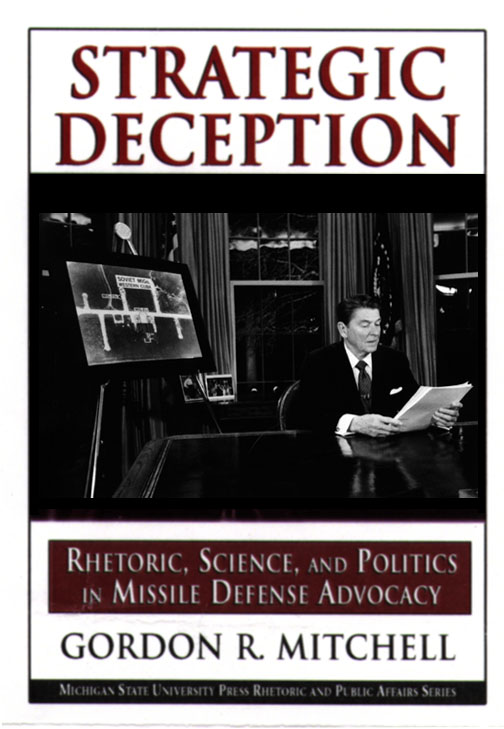
Winner James A. Winans-Herbert A. Wichelns Memorial Award for Distinguished Scholarship in Rhetoric and Public Address from the National Communication Association • MSU Press promotional material • Amazon.com page.
Journal articles
Ridgway Center
As a research associate (2002-2006) and deputy director (2007-2008) of the Matthew B. Ridgway Center for International Security Studies at the University of Pittsburgh, I convened working groups such as the Working Group on Preemptive and Preventive Military Intervention, supported Ridgway Center programming, and supervised Security Sweep, Ridgway's weblog (hosted jointly with the Ford Institute for Human Security) Documents relating to the Ridgway Center's Working Group on Preemptive and Preventive Military Intervention are here:Briefing papers
Newspaper and magazine articles
Schenley Park Debate Authors Working Group (DAWG)
For more on this group, visit the DAWG Blawg. Relevant documents:Selected public debates directed
Commentary on the 2004 presidential election debates
Commentary on September 11 and beyond
Other assorted publications
Argumentative agency in action
In 1998, I laid out a research program for 'argumentative agency in academic debate.' Debaters occasionally quote my work to leverage their critiques of contest round pedagogy, but as this conference paper from the 2004 Tokyo Argumentation Conference explains, I have no truck with the 'preparatory pedagogy' of switch-side tournament debating, so long as it is leavened meaningfully with applied collaborative projects in public advocacy, public debate, primary research and debate outreach. Such dual level pedagogy checks the 'spectator politics' mentality instilled by an exclusive diet of tournament competition. This view draws from the vision of a 'total forensics program' sketched in Douglas Ehninger and Wayne Brockriede's 1969 classic, Decision by Debate. Below are selected materials on recent collaborative efforts to hone debaters' 'argumentative agency,' - their capacity to contextualize and employ the skills and strategies of argumentative discourse in fields of social action, especially wider spheres of public deliberation: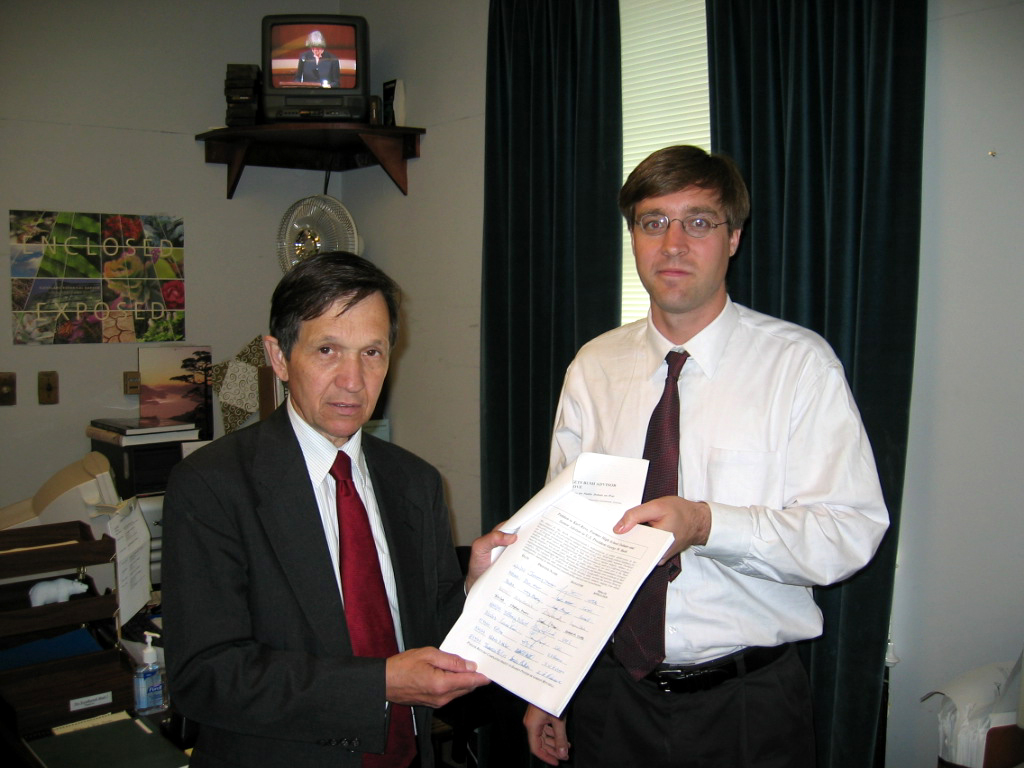
Miscellaneous debate tidbits
 PDF files best viewe